
Overview
Results at a Glance
Main Takeaways
- Product focus is the hardest discipline
The biggest product gains came from focusing on a clear ideal customer persona (ICP) and user journey, and cutting features to serve the ICP extremely well. - Build a high-performing product org without a full-time team
Contractors, fractional experts, and the right embedded leadership can match the output of a much larger org - if the process and accountability structures are right. - Always grow your org's internal capabilities
Domain expertise and empathy for users matter more than technical fluency. A team that deeply understands the problem can be leveled up to own the product - technical skills can be taught, hired, or supplemented.
Background
Areté Rising is a seven-person nonprofit bridging education pathways to career opportunity. Their product, altPath, connects uncredentialed adults with the bundled support that drives economic mobility: trustworthy information, financial aid, and curated training networks aligned to labor market demand.
When Potluck Tech came on board in June 2024, altPath faced three compounding issues:
- The user journey was fragmented. A recent paid ad campaign produced a 99% bounce rate - almost every visitor left without taking a single action.
- The development process lacked transparency. While the founding team brought deep expertise in college access and social work, they had limited experience managing software development, evaluating technical deliverables, or guiding product, UX, and architectural decisions. As a result, requirements were largely handed off to an external agency, and the team had little direct interaction with the developers building the product.
- The MVP was built on Bubble.io, a no-code platform that introduced significant performance, scalability, and design limitations due to architectural choices made by the original development agency. As vendor costs increased and delivery quality declined, the team sought a more sustainable path forward. However, Bubble's closed ecosystem made migration challenging, requiring a complete rebuild of the application and a substantial investment of time and resources.
Areté Rising realized that they needed fractional product and engineering leadership that could work inside a lean, mission-driven organization - and build the team's capability to sustain it independently.
What We Achieved
Strategy: Focus on helping users succeed
The hardest yet most rewarding shift was changing how the team thought about what was worth building.
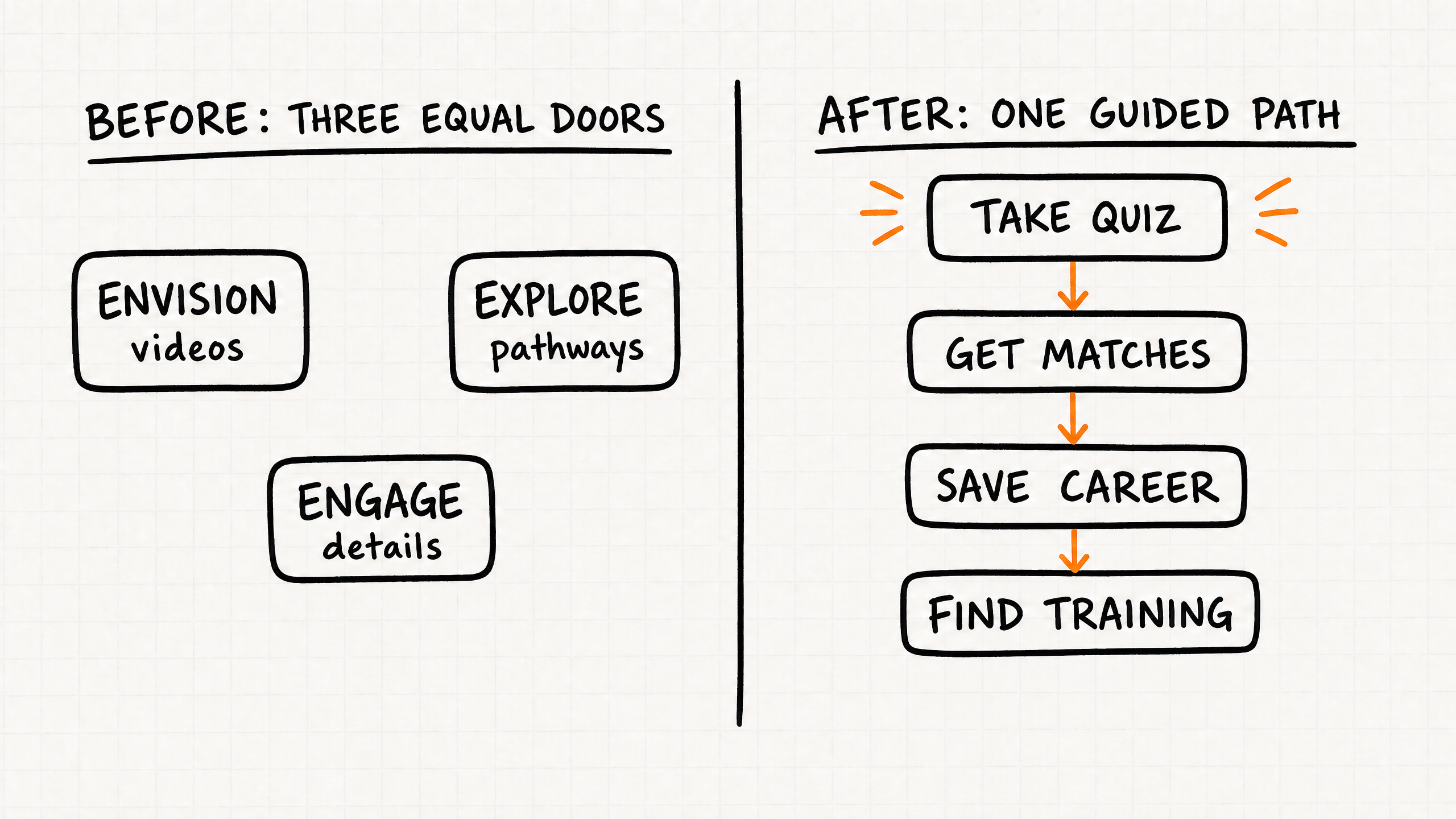
When Potluck came on board, altPath presented every visitor with three equal options: Envision, Explore, and Engage.
- Envision - Day-in-the-life videos
- Explore - Career and industry details
- Engage - Training pathways
For a first-time visitor, the site felt less like a guided path and more like a set of useful but separate resources. Users had to decide where to start before the product had helped them understand how to use the platform.
So, we worked with the Areté Rising team to focus on answering three key questions:
By reframing success, the team was able to deprioritize and cut features they had invested in and believed in. It was not easy. The original ideas were thoughtful, and the instinct to help many kinds of users was coming from the right place. But trying to help everyone made it harder to help the people who were ready to make a real career commitment.
Product: Rebuild from the ground up
The product work started with a foundational decision: move the MVP to custom code, or keep building on Bubble.io?
The answer was not obvious. The existing Bubble implementation had real cost and performance issues, but it helped the team test the early concept, and it was already up and running. A custom software migration would require a meaningful investment - not just financially, but in team capacity, commitment, and organizational focus. So we advocated for staying on Bubble in the near term, and helped the team clarify product direction and build conviction for pivoting to custom software.
Once the team developed a clear migration and development roadmap, we made the shift quickly. We brought in WISE Engineering, a trusted strategic partner for engineering and project management, scoped the roadmap, and quickly got to work. Building on custom software brought many benefits that then enabled us to hit our product and user goals:
- Product surface: We took the opportunity to focus features, and released incrementally while linking to old features on Bubble.io as needed
- Performance: altPath is now on a modern tech stack meeting performance standards. The system also easily adjusts capacity as traffic grows.
- Product <> Eng collaboration: By treating our new contractors like part of the core team, and following a remote-friendly process, our iteration speed and product quality have drastically improved.
- Rapid prototyping: We now iterate much more quickly, and instrument key user behaviors. This enables us to make steady progress towards our goals.
Here’s a peek into the altPath homepage, Before and After

Team: building the internal capability to own the product
Potluck Tech’s goal is always to bridge the organization’s needs, and build towards sustainability. For Areté Rising, this meant building the core team's capability so that they can now manage the product independently.
This effort was 3 fold:
- Team: We augmented the core team with the right skills, by scoping, hiring, and onboarding design, engineering, and data roles.
- Training: We crafted professional development goals, and supported the team through dedicated coaching (teaching), collaboration (showing), and guided practice (doing).
- Tools and Process: We set up a product and engineering workflow aligned with the team's structure and goals, supported by software and AI tools that streamlined collaboration, accelerated iteration, and improved coordination across a remote team.
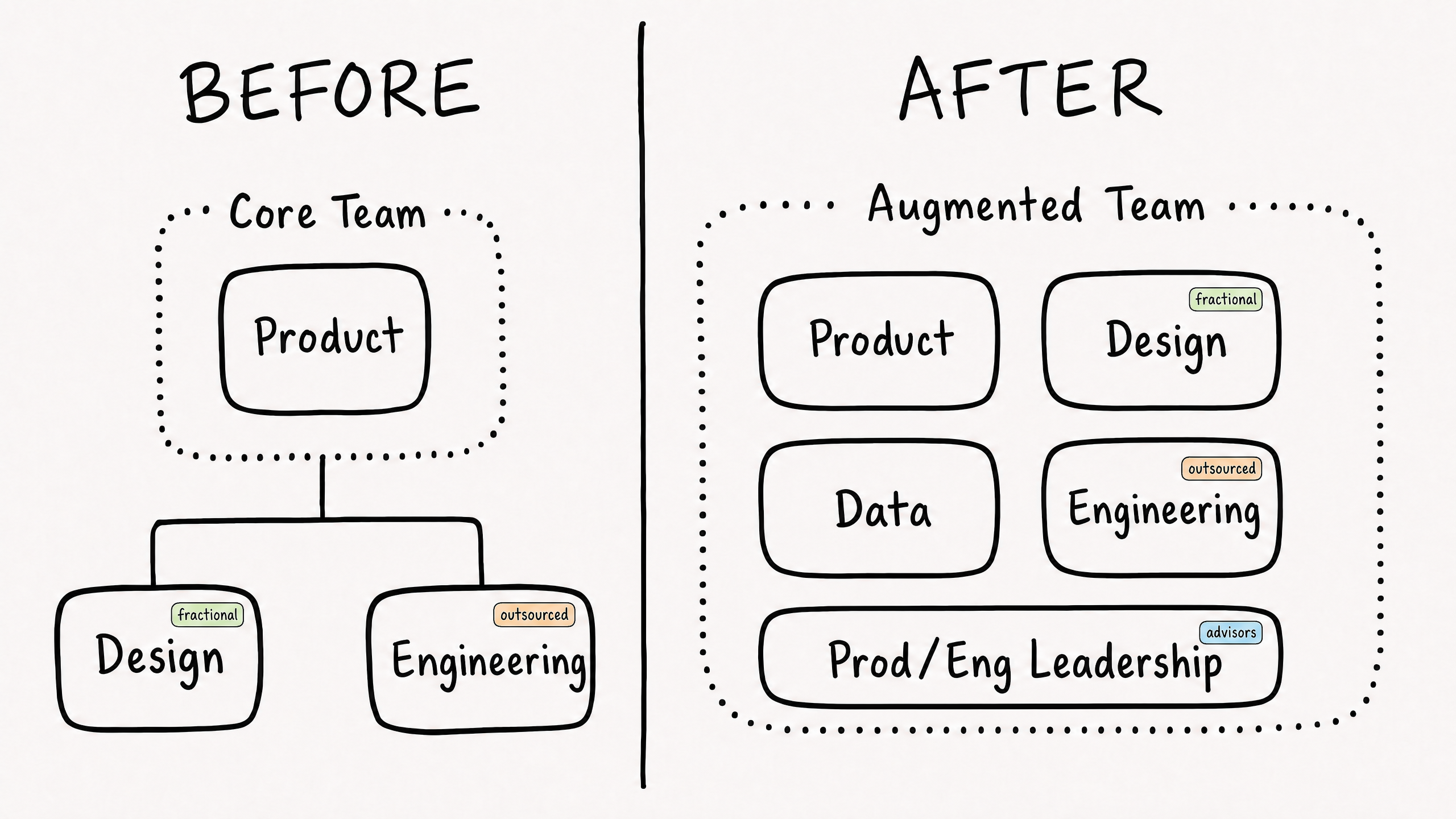
Working as a CTO/CPO team helped reduce dropped handoffs across functions, diagnose root bottlenecks instead of surface symptoms, and teach Areté Rising how to make product decisions quickly. The Areté team now decides what to build next, what tradeoffs to make, when to fix the foundation, and when to move fast by themselves.
What this means for mission-driven startup teams
Areté Rising was a small startup team with deep mission expertise and no technical fluency, trying to build a product that could change how people think about their careers.
The fractional model worked because it matched the organization's needs and constraints. A full-time CTO and CPO would have been an overhead the organization couldn't justify. Areté Rising needed senior judgment - on architecture, on product direction, on hiring, on tooling - at the hours and cost appropriate for a lean nonprofit operation.
Together, we built more than a product. We helped Areté Rising develop the organizational capability to keep building independently, so the team could continue improving the platform, making better technical decisions, and advancing its mission long after our engagement ended.
About Potluck Technologies
Potluck Technologies is a fractional CTO and CPO firm that embeds with early-stage and mission-driven startups. We are former Google engineering and product leaders - Sha-Mayn Teh led engineering teams at Google Translate, Google Beijing, AdWords, and ed-tech marketplace TeachersPayTeachers; Yu Chen led product across Google Search, Maps, and Internet Connectivity, and two coding bootcamps.
We work inside teams, not as outside advisors. The goal of every engagement is to make ourselves unnecessary.